Friday Sermon: The Perfect Worship and Love of the Holy Prophet (Peace and Blessings of Allah be Upon Him) for Allah the Almighty
“May Allah the Almighty enable us to fulfil the due rights of His worship, grant us the ability to adopt the noble example of the Holy Prophet (peace and blessings of Allah be upon him), and grant us the strength to strive to follow his blessed model in its true and complete spirit” – Hazrat Mirza Masroor Ahmad
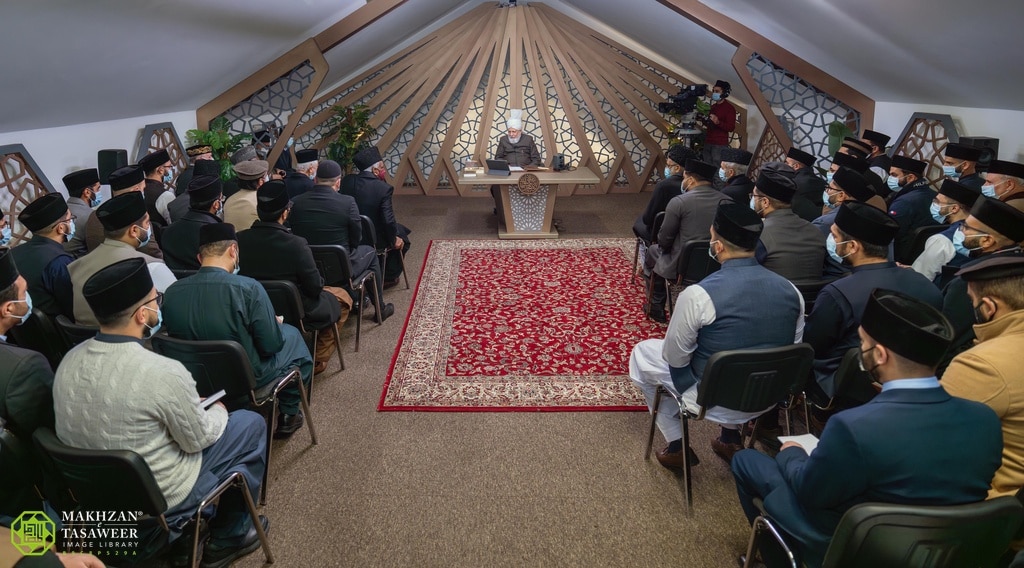
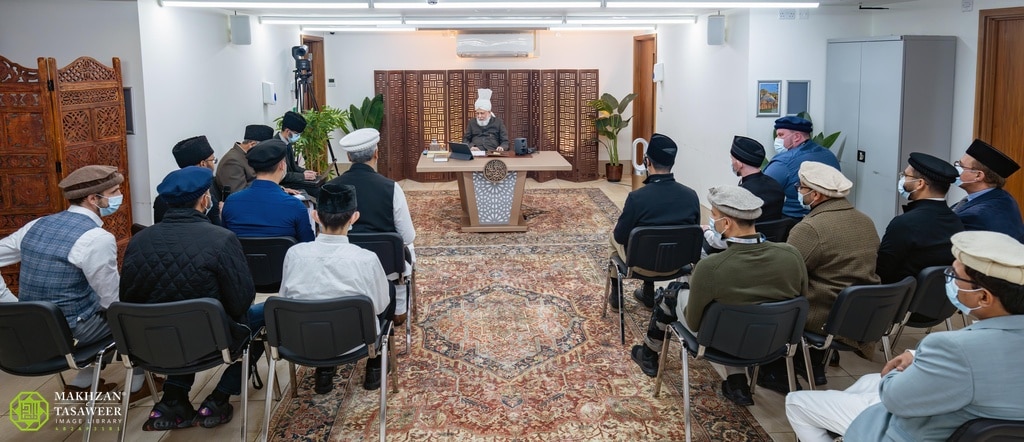
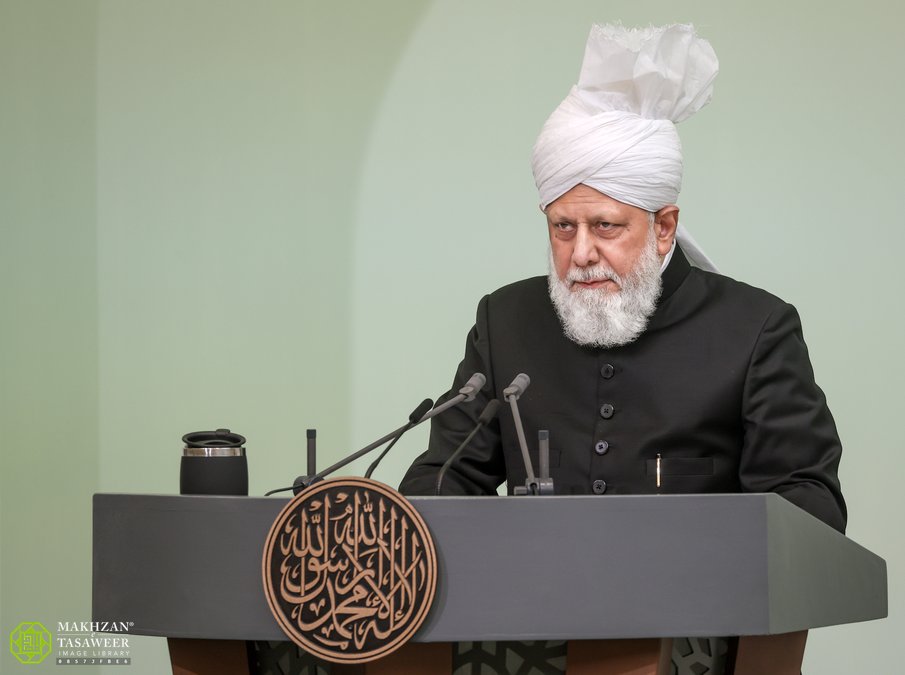
On 6 February 2026, the Worldwide Head of the Ahmadiyya Muslim Community, His Holiness Hazrat Mirza Masroor Ahmad, delivered this week’s Friday Sermon from the Mubarak Mosque in Islamabad, Tilford, UK.
At the outset of his sermon, His Holiness Hazrat Mirza Masroor Ahmad explained that in his previous sermons he had sought to cover the unparalleled and profound devotion and love possessed by the Holy Prophet (peace and blessings of Allah be upon him) for Allah the Almighty.
Continuing with the same topic, Hazrat Mirza Masroor Ahmad said:
“The Holy Prophet (peace and blessings of Allah be upon him) is for us a perfect and excellent example in every matter. In recent sermons, the Holy Prophet’s (peace and blessings of Allah be upon him) profound love for Allah the Almighty has been discussed in this context, and while speaking about this divine love, the extraordinary standard of his worship has also been highlighted.”
His Holiness continued:
“I had intended to focus specifically on the worship of the Holy Prophet (peace and blessings of Allah be upon him) as part of this theme of love for Allah. However, once the subject of divine love was introduced, numerous incidents relating to his worship naturally came to the fore. I am unable to separate these two themes, because they are inextricably linked. There can be no true worship without love for Allah, and no genuine love for Allah without worship. Without love for Allah the Almighty, true worship cannot exist.
In any case, whatever I shall further explain today in this regard may be presented in the context of worship, but its ultimate conclusion, as I mentioned in the previous sermon, is the manifestation and strengthening of love for Allah the Almighty.”
Hazrat Mirza Masroor Ahmad then reminded the audience that God Almighty has perfectly encapsulated the level of profound love that the Holy Prophet (peace and blessings of Allah be upon him) had for Him in the Holy Qur’an.
Whilst reciting a verse of the Holy Qur’an, His Holiness said:
“With reference to a verse of the Holy Qur’an, Allah the Almighty has described the lofty standard of the Holy Prophet’s (peace and blessings of Allah be upon him) love. Allah the Almighty states:
“Say, ‘My Prayer and my sacrifice and my life and my death are all for Allah, the Lord of the worlds.’” (The Holy Qur’an Chapter 6:163)”
Whilst explaining the importance of showing emotion during one’s prayers, Hazrat Mirza Masroor Ahmad explained:
“It is essential for a person to develop deep humility and heartfelt emotion in their prayers, and one must strive to attain this state. In this regard, the Promised Messiah (peace be upon him) also prescribed a practical method, explaining that even adopting the outward appearance of weeping can influence the heart. Through this external expression, a person’s inner feelings are stirred, and genuine tears and humility begin to flow.”
Thereafter, His Holiness highlighted the remarkable balance in the life of the Holy Prophet (peace and blessings of Allah be upon him) between deep devotion to worship and compassion for others. His Holiness explained that true spirituality about remaining sensitive and considerate, even during acts of worship.
His Holiness noted that the Holy Prophet’s example reflects genuine humility and sincerity. Unlike those who take pride in appearing spiritually absorbed, the Holy Prophet (peace and blessings of Allah be upon him) demonstrated that real closeness to Allah is accompanied by simplicity and concern for others. This is the hallmark of sincere faith.
Hazrat Mirza Masroor Ahmad said:
“The Holy Prophet (peace and blessings of Allah be upon him) said, ‘At times, I begin my prayer intending to prolong it, but when I hear a child crying, I shorten my prayer out of concern that I may cause hardship to the child’s mother.’”
Whilst explaining this narration, His Holiness said:
“The Holy Prophet (peace and blessings of Allah be upon him) stated that upon hearing a child’s voice, he would hasten his prayer. In contrast, some so-called mystics of today might regard such a statement as a slight to their spiritual status. They often take pride in claiming that they become so absorbed in prayer that they remain completely unaware of their surroundings, even if drums were beating nearby.”
His Holiness, Hazrat Mirza Masroor Ahmad, continued:
“However, the Holy Prophet (peace and blessings of Allah be upon him) was free from such artificial displays. His honour and dignity were granted by Allah the Almighty, not by people. He sought no recognition from others; rather, he desired honour from Allah alone. Therefore, he was free from such pretence. Such thoughts only arise in the minds of those who consider people to be the source of honour. This kind of ostentation can only exist among those who believe that status and dignity come from human beings.
Those who recognise Allah as the true Bestower of honour, and who follow the practice established by the Holy Prophet (peace and blessings of Allah be upon him) through his own example, can never entertain such notions. Instead, they embody simplicity, and they ought to do so.”
His Holiness explained that Islam establishes a relationship of mutual responsibility and equality between husband and wife. Both are encouraged to support one another in worship and moral development.
Whilst explaining the importance of offering the tahajjud prayer, the voluntary prayer before dawn, Hazrat Mirza Masroor Ahmad said:
“The Holy Prophet (peace and blessings of Allah be upon him) said that Allah the Almighty shows mercy to that husband and wife who, when the husband awakens during the night, rises to offer the Tahajjud prayer and also awakens his wife, saying, “You too should get up and offer Tahajjud.” And if she does not awaken, he gently sprinkles water on her face to awaken her.
Likewise, if the wife awakens during the night, she should herself offer the Tahajjud prayer and awaken her husband, and if he does not awaken, she should sprinkle water on his face to wake him.”
Continuing on the importance of the tahajjud prayer, Hazrat Mirza Masroor Ahmad said:
“The Holy Qur’an states that rising during the night helps to straighten and discipline the soul. For this reason, the Holy Prophet (peace and blessings of Allah be upon him) would instruct his companions that even if they offered only two units of Tahajjud prayer, they should make sure to offer them.
Furthermore, the Hadith also establishes that during the final portion of the night, Allah the Almighty draws near and accepts prayers in great abundance. Therefore, offering the Tahajjud prayer is extremely important and highly beneficial.”
To conclude, Hazrat Mirza Masroor Ahmad prayed:
“May Allah the Almighty grant us the ability to benefit from this divine light [of the Holy Prophet (peace and blessings of Allah be upon him)]. May Allah the Almighty enable us to fulfil the due rights of His worship, grant us the ability to adopt the noble example of the Holy Prophet (peace and blessings of Allah be upon him), and grant us the strength to strive to follow his blessed model in its true and complete spirit.”