Hazrat Mirza Masroor Ahmad Grants Audience to Ahmadi Youth from Italy
“If we become truly grateful to Allah the Almighty and act upon His commandments; worshipping Him, caring for people, looking after the poor, and demonstrating good morals, then we shall draw closer to Him and He shall bestow His grace upon us.” – Hazrat Mirza Masroor Ahmad
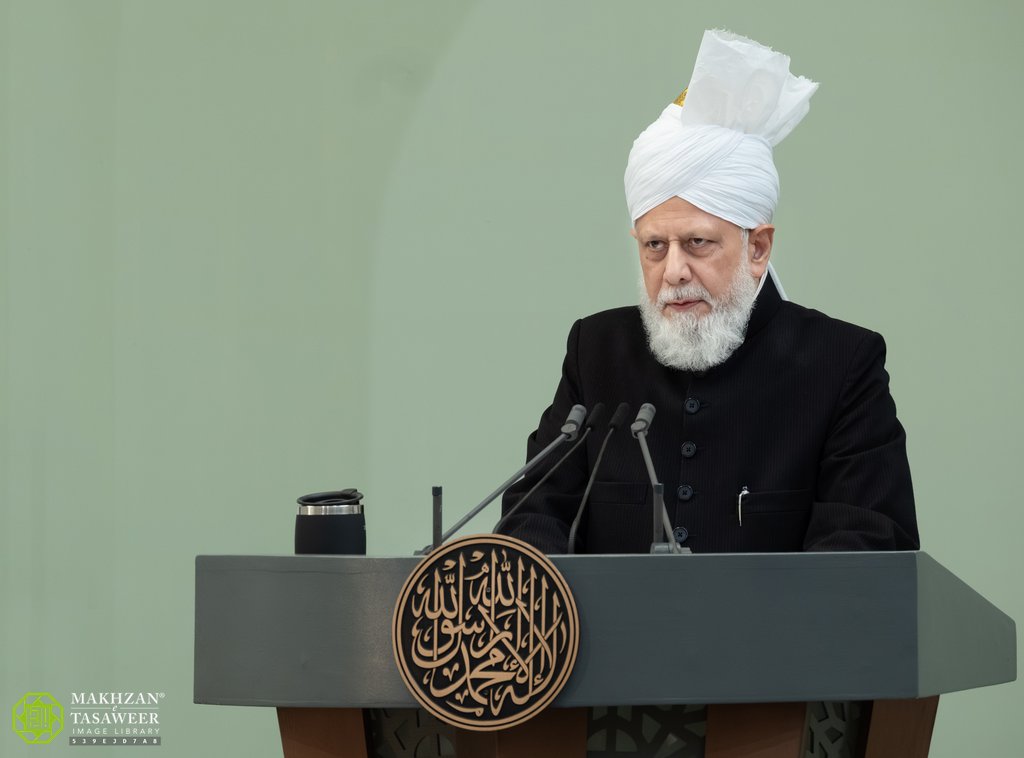
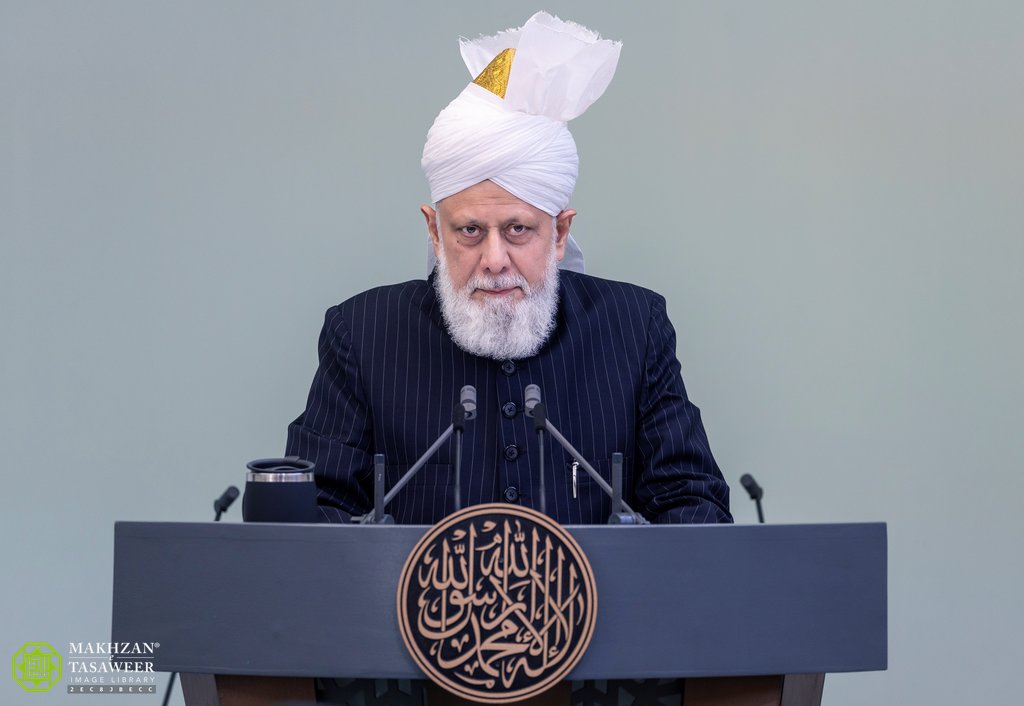
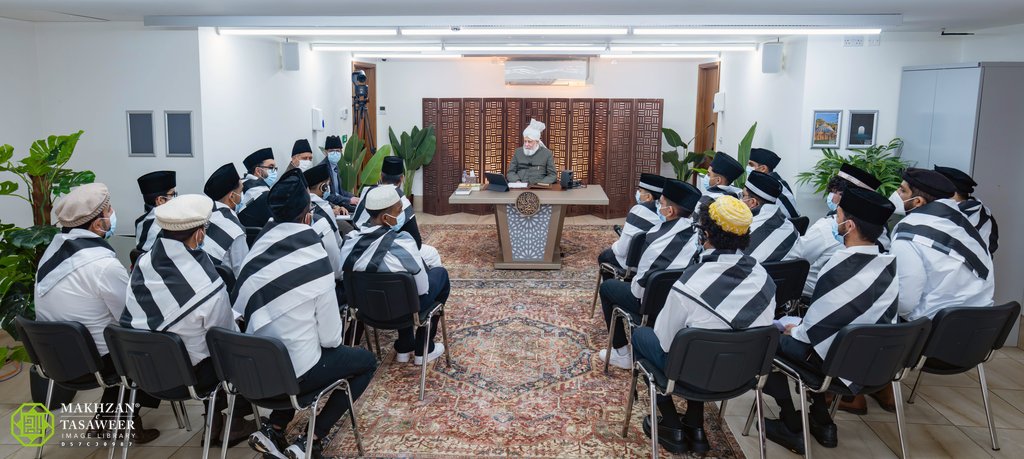
On 14 December 2025, the Worldwide Head of the Ahmadiyya Muslim Community, His Holiness Hazrat Mirza Masroor Ahmad, the Fifth Khalifa (Caliph), met a group of young Ahmadis from Khuddamul Ahmadiyya Italy. Majlis Khuddamul Ahmadiyya, also known as the Ahmadiyya Muslim Youth Association, is the Community’s auxiliary for male members under the age of forty.
Each member had the chance to introduce themselves to His Holiness. Afterwards, members sought His Holiness’ guidance on a variety of issues facing the youth of today.
A young attendee asked His Holiness why God Almighty had created a variety of animals to live alongside mankind on the earth.
In reply, Hazrat Mirza Masroor Ahmad stated:
“Allah the Almighty declares that He has not created anything without purpose. Everything has an objective. He created the human being as the noblest of all creation, elevating him above all other living beings. Mankind too belongs to the animal world, yet a human is a social being, endowed with intellect and learning.”
His Holiness continued:
“Moreover, Allah the Almighty created the rest of creation for the benefit of humankind. Allah says that He has created animals for you as means of transport. He created animals from which you eat and upon which you ride. This is stated clearly in the Holy Qur’an, and that humanity derives many other benefits from them. For example, there are numerous animals that have been created for human treatment and healing…
Similarly, there are countless other benefits… Animals, trees, mountains; everything that Allah has created in this world has been created for the benefit of mankind. One should therefore be ever grateful and content that Allah has made everything for us and has placed all of His creation in our service.”
Another attendee asked His Holiness how young Ahmadis could gain closer to Allah the Almighty and become a source of comfort for the eyes of the Khalifa.
In response, His Holiness stated:
“If we become truly grateful to Allah the Almighty and act upon His commandments; worshipping Him, caring for people, looking after the poor, and demonstrating good morals, then we shall draw closer to Him and He shall bestow His grace upon us.
The Promised Messiah (peace be upon him) came for this very purpose, to bring about a moral and spiritual revolution… So, if we become good Muslims, if we act upon the teachings of the Holy Qur’an, act upon the commandments of Allah, act upon the teachings of the Holy Prophet (peace and blessings of Allah be upon him), and fulfil the mission for conveying the message of the Holy Prophet (peace and blessings of Allah be upon him) for which the Promised Messiah (peace be upon him) came, and thereafter act in accordance to the instructions of the Khalifa – if we do all this, then the Khalifa of the time will be pleased. This is the means of becoming a source of comfort to the eyes [for the Khalifa of the Time].”
Another attendee asked His Holiness why some people do not believe in God Almighty even though the Holy Qur’an says that the belief in God is bestowed upon humans as part of their nature.
In response, Hazrat Mirza Masroor Ahmad said:
“This happens because people do not consciously strive to seek Him. The Promised Messiah (peace be upon him) has explained this matter with great clarity – that it is human nature that when a person becomes trapped or finds himself in severe difficulty, even one who claims to be an atheist, instinctively calls out ‘O God.’
This indicates that something is deeply embedded within a human being. There exists an inner reality which, even when denied, manifests itself in moments of distress. When a person is overwhelmed by hardship, the name of God emerges naturally from within.
Similarly, Allah the Almighty states that when people begin to drown, when they are caught in a storm, they instinctively call upon Allah. When calamity strikes, God is remembered. This is not necessarily the result of deliberate reflection or conscious reasoning; rather, it is something ingrained in the mind and embedded within human nature. In moments of crisis, a person cries out, ‘O Allah, save me; I will reform myself; I will perform good deeds.’ Yet, when that hardship is removed, when ease and comfort return, people once again begin to speak against Him and adopt attitudes and behaviours that displease Him.”
His Holiness further said:
“A truly good person is one who does not forget the kindness shown to them by others. If a friend shows you genuine kindness, and you then forget that favour and begin to harbour negative thoughts or speak ill of them, people will not regard you as a good person. However, if you remember that kindness, remain grateful for it, and consistently acknowledge it, people will say that such a person is noble and possesses high moral character.
In the same way, the favours of Allah the Almighty must be remembered. When His blessings are kept in mind, negative thoughts do not take hold. One is reminded of prayer, and one is reminded of expressing gratitude to Allah.”
Another attendee then asked His Holiness how we can avoid overthinking before going to sleep, which can trigger anxiety or worry.
In response, Hazrat Mirza Masroor Ahmad stated:
“The Holy Prophet (peace and blessings of Allah be upon him) taught that one should recite prayers before going to sleep at night. He instructed that Ayat-ul-Kursi of the Holy Qur’an [2:256] should be recited before sleeping.”
His Holiness also stated that the final three chapters of the Holy Qur’an should be recited before sleeping.
Thereafter, His Holiness further said:
“One should reflect upon these chapters and consider how Allah’s attributes are mentioned, along with prayers for protection from evil, from harm, from envy, and reminders of the power and majesty of Allah the Almighty.
If a person falls asleep while reflecting upon these matters, their mental anxieties and inner restlessness gradually subside. Therefore, one should first turn to prayer. Allah the Almighty has prescribed the Isha prayer so that one may pray at night, beseeching God that all the worries and concerns of the day be removed and that ease be granted. Thereafter, one should sleep peacefully, retire early, and rise early for Tahajjud. In this way, one’s worries are alleviated.
Allah the Almighty has stated: ‘Verily, it is in the remembrance of Allah that hearts find peace.’ [13:29] Thus, one should engage in the remembrance of Allah, for it is through His remembrance that Allah the Almighty grants tranquillity to the heart.”
An attendee asked His Holiness how one should convey the message of Islam to individuals who feel deeply attached to their existing faith, particularly those who cite personal experiences or dreams, such as Christians who believe they have seen the Prophet Jesus (peace be upon him) in their dreams.
His Holiness explained that Islam fully recognises Jesus Christ (peace be upon him) as a true Prophet of God, along with Moses and many other prophets who were sent to different nations throughout history. He emphasised that Islam teaches that all prophets were truthful and divinely appointed. Therefore, if someone believes they have seen Jesus Christ in a dream or spiritual experience, this does not present a conflict, as Muslims also revere him.
His Holiness further explained that both Islamic teachings and Biblical prophecies point towards the coming of a final, universal Prophet who would bring together the teachings of all previous prophets and be sent for the whole of humanity. He highlighted that Jesus himself stated he was sent specifically to the Israelites, whereas the Holy Prophet (peace and blessings of Allah be upon him) was sent for all people. Therefore, rather than confronting others or dismissing their beliefs, His Holiness advised that dialogue should focus on encouraging people to study their own scriptures carefully and reflect on these prophecies using wisdom when conveying the message of Islam.