Caliph of the Ahmadiyya Muslim Community Highlights the Qur’anic Method of Dialogue with Wisdom and Moral Example in Friday Sermon
“If we are to undertake the task of conveying the message of Islam and engaging in preaching… We must act in accordance with the teachings of the Holy Prophet (peace and blessings of Allah be upon him) and establish a deep and special relationship with Allah the Almighty” – Hazrat Mirza Masroor Ahmad
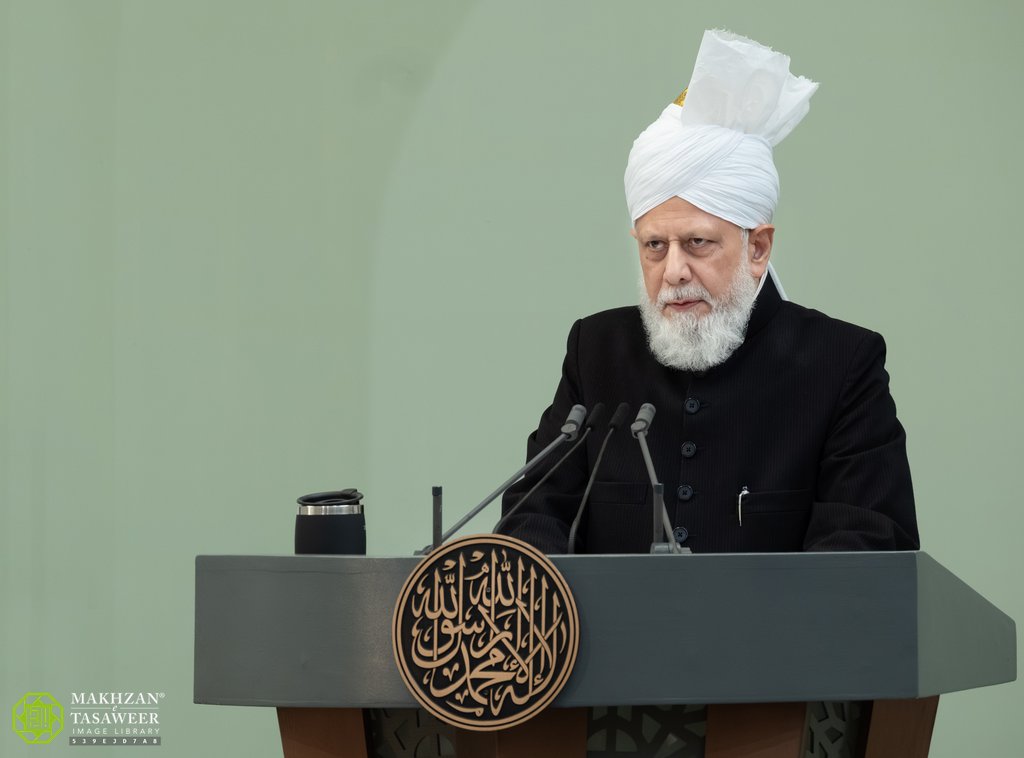
In his Friday Sermon delivered on 12 December 2025, the Worldwide Head of the Ahmadiyya Muslim Community, the Fifth Caliph, His Holiness Hazrat Mirza Masroor Ahmad, highlighted the Qur’anic principles that should guide anyone who seeks to preach their faith. His Holiness underscored that Islam calls for wisdom and dignified dialogue, and warned that negligent or confrontational approaches can produce the opposite effect and even create misunderstandings about Islam.
His Holiness began by reciting a Qur’anic verse that sets out the standard for engagement with others. The Holy Qur’an states:
“Call unto the way of thy Lord with wisdom and goodly exhortation, and argue with them in a way that is best. Surely, thy Lord knows best who has strayed from His way; and He knows those who are rightly guided.” (16:126)
Addressing the realities of modern communication, His Holiness noted that social media can give the impression that outreach is easy, but stressed that it carries responsibilities and etiquette. He observed that some people enter discussions about religion without adequate preparation, become disheartened when they cannot answer questions fully, or unintentionally create a negative impression. His Holiness emphasised that those who wish to represent Islam should first strengthen their knowledge of its true teachings and seek support from established outreach teams where needed.
His Holiness then quoted the Promised Messiah (peace be upon him), who cautioned against appointing representatives who lack a full grasp of Islamic teachings. His Holiness explained that sincere intentions alone are not enough, and that effective outreach requires learning and a deep connection with God.
Quoting the Promised Messiah (peace be upon him), His Holiness said:
“I do not consider it appropriate at all that such people, who are not fully acquainted with Islamic teachings and are entirely unaware of its highest excellences, and are not fully able to address the criticisms of the present age, and are not supported by the divine Holy Spirit, should go as representatives on our behalf.”
His Holiness also addressed a topic frequently misunderstood in public discourse. He explained that Islam does not permit religiously motivated violence, and that the permission to fight given in the Qur’an was entirely defensive in nature, in response to sustained persecution and aggression. His Holiness said that the primary jihad or struggle is the peaceful striving taught by the Qur’an, centred on spiritual reform, moral conduct and conveying Islam’s teachings through reason and compassion.
His Holiness further stressed that a person’s words only carry weight when matched by their conduct. Quoting the Promised Messiah (peace be upon him), His Holiness highlighted that the most convincing form of conveying the message of Islam is to become a living example of Islamic morals. He noted that when people see words matched with action, they are more likely to listen and to understand the true teachings of Islam.
“Listen to what I say and remember it well: if a person’s speech is not from a true heart, and there is no practical strength in it, then it does not take effect.”
Thereafter, His Holiness said:
“Therefore, if we are to undertake the task of conveying the message of Islam and engaging in preaching, we must adopt this very approach. We must act in accordance with the teachings of the Holy Prophet (peace and blessings of Allah be upon him) and establish a deep and special relationship with Allah the Almighty.”
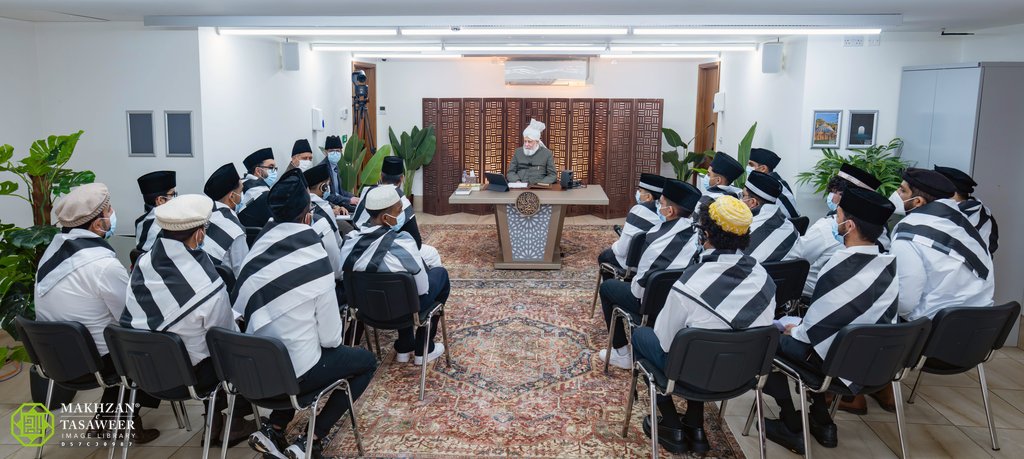
Concluding his sermon, His Holiness urged Ahmadis and especially the missionaries of the Community, to focus on moral and spiritual training, deep study of the Qur’an and Islamic sources, prayer, consistency, and building constructive relationships with wider society. His Holiness prayed that those engaged in outreach do so with sincerity and humility, so that the message of the true Islam is conveyed in every corner of the world.