“Remain firm in your faith. You have pledged to place religion above the world.” – Hazrat Mirza Masroor Ahmad
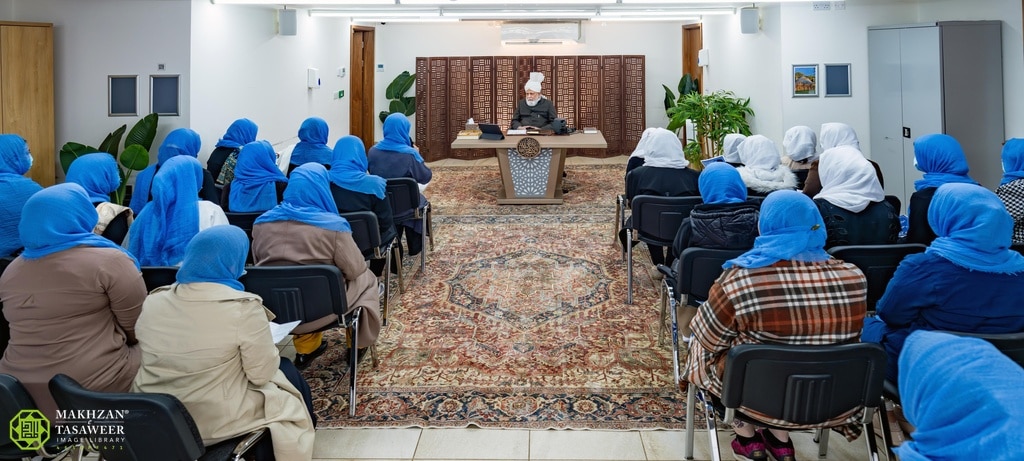
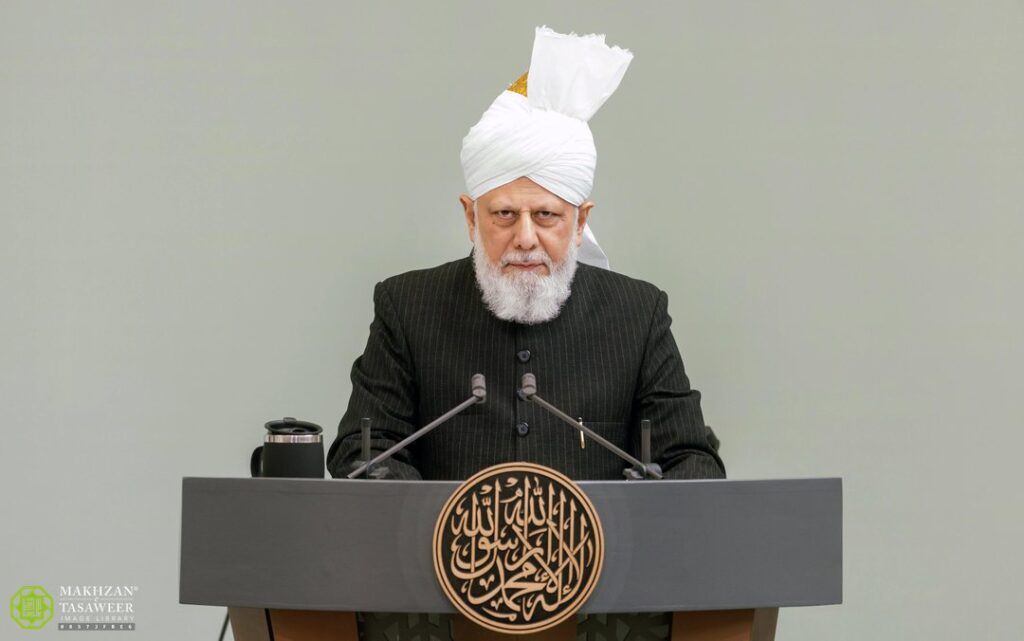
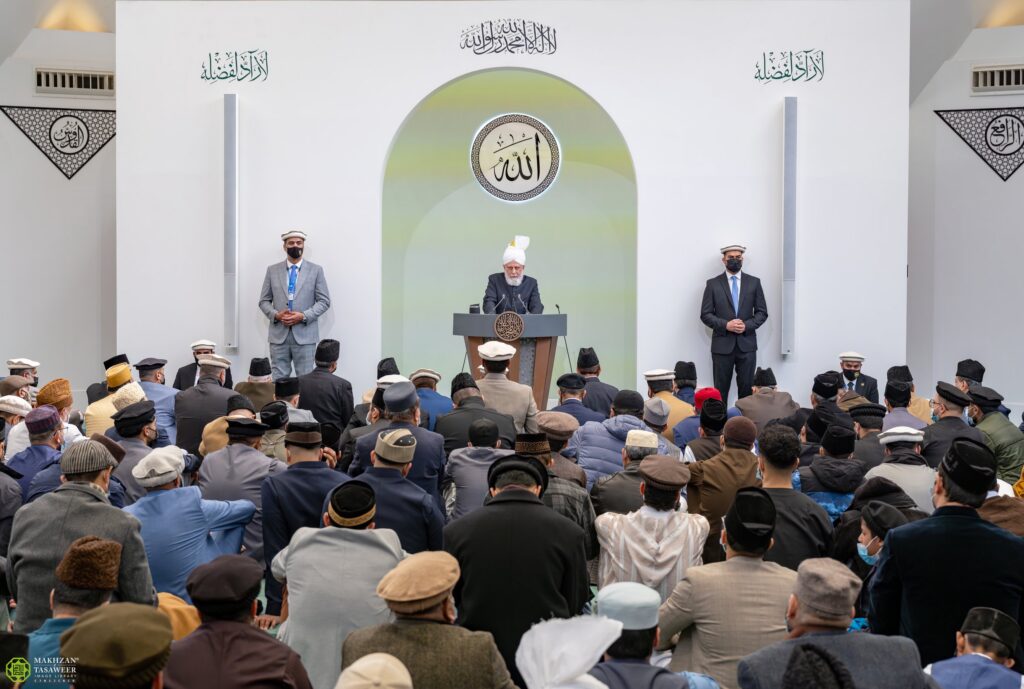
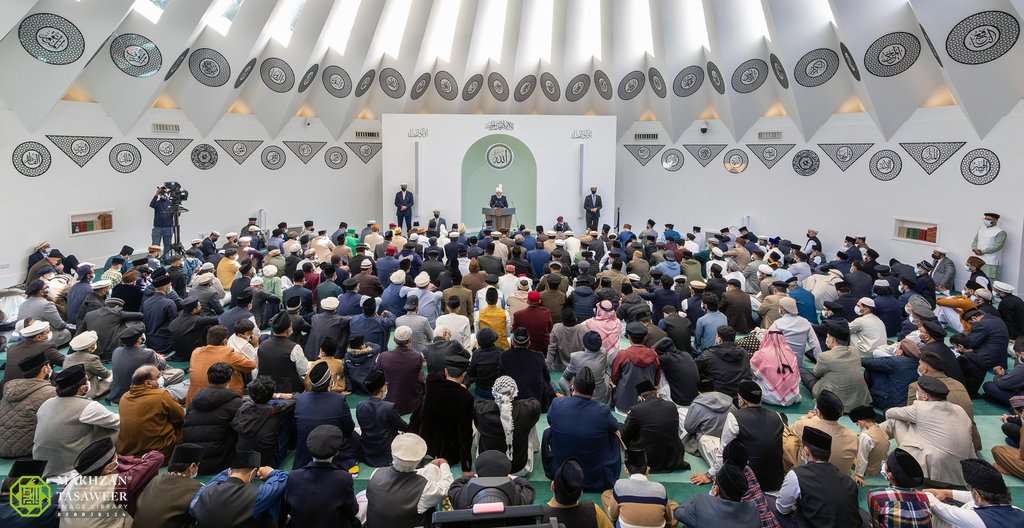
On 28 March 2026, the World Head of the Ahmadiyya Muslim Community, the Fifth Khalifa (Caliph), His Holiness, Hazrat Mirza Masroor Ahmad held an in-person meeting in Islamabad with members of Nasirat-ul-Ahmadiyya (Ahmadiyya Muslim Girl’s Association) and Lajna Imaillah (Ahmadiyya Muslim Women’s Association) from Finland.
During the session, all participants had the opportunity to speak directly with His Holiness, introduce their background and roles within their community and ask a range of questions regarding their faith and contemporary issues.
A young Nasirat member asked His Holiness what she should do as her parents discourage her from listening to music and chatting with friends on WhatsApp, while her peers at school a within the community regularly do so.
Hazrat Mirza Masroor Ahmad stated:
“Nowadays, even governments have begun to place restrictions. In Australia, for example, they have introduced limits on children’s screen time and access to social media, and similar laws have been passed or are being introduced here as well… If you wish to do something worthwhile, then you should watch good programmes, such as those broadcast on MTA. There are children’s programmes – watch those. If there are documentaries, watch those. Read books. Read the Holy Qur’an. Offer your five daily prayers. If you do these things, you will not have any time left to chat with friends or waste time on WhatsApp or listening to music. Your parents are only doing what is best for you. So do not follow your friends; rather, become an example for them instead of following them.”
Another member of Nasirat asked His Holiness why it is important to recite the Holy Qur’an daily and what benefits it holds.
Hazrat Mirza Masroor Ahmad stated:
“The Holy Qur’an is the Word of Allah. Allah revealed this Book to the Holy Prophet Muhammad (peace and blessings of Allah be upon him). Allah has commanded us to recite it, promising that He will bless us, grant us rewards, and guide us to do good deeds. It protects us from wrong actions and purifies the person. Even for those who do not fully understand it, such as children, recitation brings benefit. By the blessings of Allah, it protects them from wrongdoing.”
His Holiness then asked the questioner’s age and noted that at nine years old, she could begin to understand more. He advised her to read the translation of Surah Al-Fatihah, the first chapter of the Qur’an, and to learn its meaning. He also encouraged her to read the last three chapters – Surah Al-Ikhlas, Al-Falaq, and An-Naas – and learn their translations, adding that these chapters contain many lessons and guidance from God Almighty.
Hazrat Mirza Masroor Ahmad continued:
“When one recites the Holy Qur’an and reflects upon its meanings, Allah the Almighty teaches what is good and what is wrong. Good deeds are rewarded, while wrong deeds have consequences. As one grows older, it is important to learn the translations so that one can understand the guidance fully and benefit from it.”
Another young attendee, aged nine, shared with His Holiness that she wears tunic (kameez) and scarf to school, but her classmates tease her and keep their distance because of her clothing. She sought guidance on how to handle this situation. His Holiness, noting that there is no strict school uniform policy in Finland, offered guidance on how students can dress modestly, feel confident, and handle taunting from peers.
His Holiness emphasised that she should feel confident in her choice, saying she could tell others: “This is my clothing. What’s wrong with it? I am wearing what I like, and I feel good in it.”
His Holiness encouraged her to befriend kind and tolerant classmates and remain strong in her faith, reminding her that God Almighty values good deeds, so there is no need to fear anyone while following what is right.
During the session, another young Nasirat member asked His Holiness about the arrangement of the Holy Qur’an’s chapters (surahs) and how their order was decided.
Hazrat Mirza Masroor Ahmad stated:
“The Holy Qur’an was revealed at different times. Some chapters were partially revealed before the migration (Hijrah) and partially after. But Allah guided the Holy Prophet (peace and blessings of Allah be upon him) on how to arrange them. Sometimes verses of the Qur’an were revealed at different occasions. The Holy Prophet (peace and blessings of Allah be upon him) received guidance from Allah about which verse should be placed in which chapter and at what position. He then called the scribes and instructed them on how to arrange the Qur’an.”
Hazrat Mirza Masroor Ahmad continued:
“The benefit of this arrangement is that the entire content of the Qur’an flows according to the chapters. Every verse has wisdom in it. Its order connects one subject to the next, and all the chapters follow this pattern. Allah guided the Holy Prophet (peace and blessings of Allah be upon him) in this way, and the Holy Prophet (peace and blessings of Allah be upon him) instructed the arrangement accordingly. The chapters were then established in their proper order. There is no question of anything being out of place. What Allah guided has been implemented, exactly as the Holy Prophet (peace and blessings of Allah be upon him) instructed us.”
Towards the end, a Lajna member asked His Holiness whether Muslims should consider migrating if war breaks out in their country, and what types of countries might be safer to move to.
His Holiness explained that no country in the world can be considered completely safe, including Muslim-majority nations. He noted that even countries such as Turkey, Pakistan, and other Middle Eastern nations face threats of war or conflict. While some African countries may be relatively safer, there is no guaranteed haven. He referenced Finland as an example and how it borders with Russia, explaining that even countries not directly at war can be affected due to proximity to conflict zones, highlighting the persistent global threat of instability. His Holiness advised that the best course of action is to place one’s trust in Allah and pray for safety, emphasising that sincere supplication is the only solution.
Following this, an attendee asked His Holiness how she should approach her ongoing health struggles, as years of treatments and medications have left her feeling exhausted and disheartened.
Hazrat Mirza Masroor Ahmad stated:
“May Allah grant His Grace. But Allah has Himself instructed that we should also rely on means. When taking medicines, pray to Allah that He grant healing through them, because medicines are created by Allah’s Wisdom. Allah has given humans intelligence and created medicines for a purpose, so they should not be abandoned. Take the medicines and pursue treatment, and while taking each dose, recite: ‘Allāhumma anta ash-Shāfī’ (O Allah, You are the Healer). Pray in this way and continue your treatment. Medicines should not be discontinued. May Allah continue to bless you.”
Another community member inquired about the possibility of a weekly worldwide prayer arrangement behind His Holiness, specifically to pray for peace and an end to suffering.
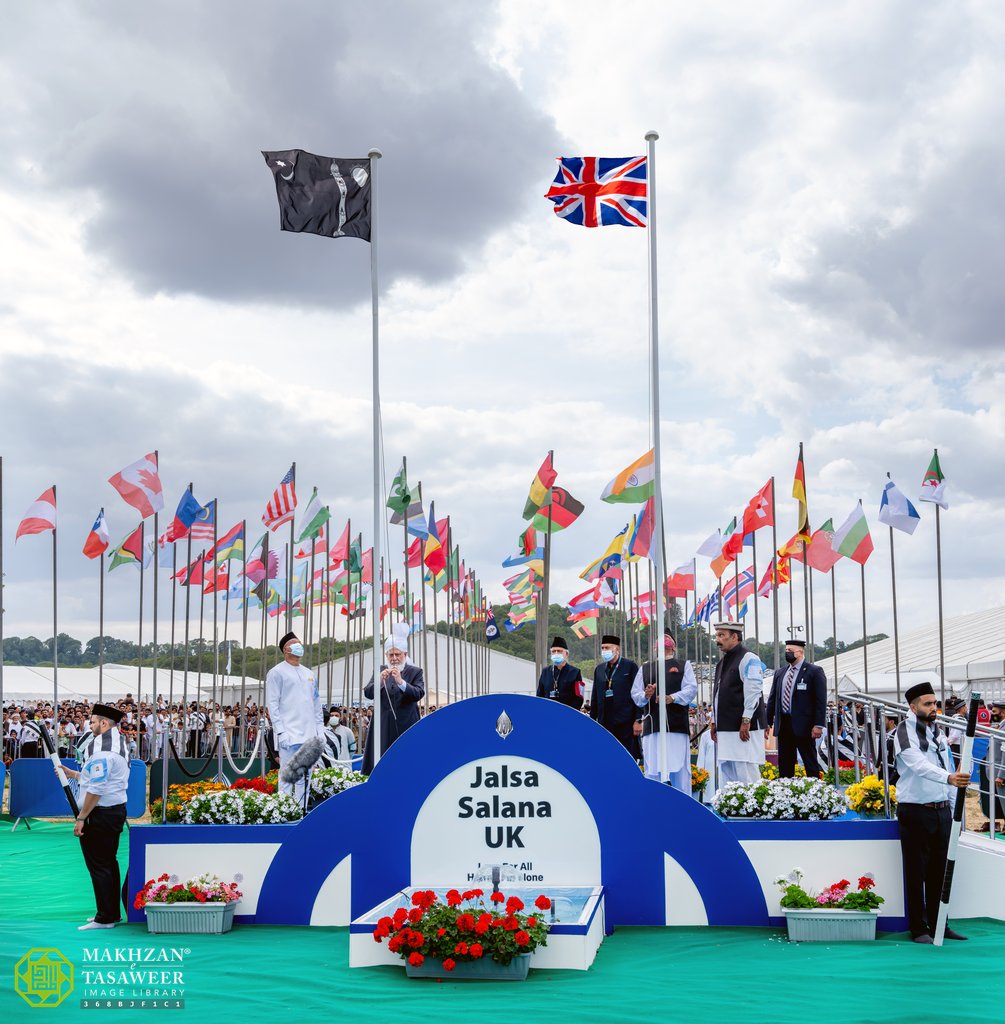
His Holiness stated that during the Jalsa Salana (annual convention), he offers prayer while participants around the world join in spirit, even though the exact arrangement of who stands where cannot be known. He explained that silent prayers with raised hands are offered, asking “for the betterment of the world, for the peace of the world, and for protection from the evils of Satan.” His Holiness emphasised that prayer should not be limited to a single day; every individual should include these intentions in their own daily prayers and during other functions. His Holiness added, “When you say ‘ameen,’ you have included yourself in my prayers,” highlighting how participants can join in these global supplications while continuing their personal supplications.
At the end of the session, a Lajna member asked His Holiness how non-Ahmadi women who show interest in discussions about Islam can be effectively guided toward understanding and accepting Ahmadiyyat.
Hazrat Mirza Masroor Ahmad stated:
“The key is to set an example. When you build good relationships and foster friendships, and you demonstrate the true teachings of Islam through your own conduct, that alone is sufficient. What is the essence of Tabligh (propagation of faith)? Tabligh means exhibiting your own example and conveying the teachings of Islam. When people see that you are practising the true teachings of Islam – whether they are non-Muslims or non-Ahmadi Muslims – they will notice your [good] conduct and your virtues. Gradually, they will be influenced and will understand that these people are on the right path. They will want to follow and associate with them, or at the very least, they will stop opposing them.”
Hazrat Mirza Masroor Ahmad continued:
“Allah has made clear that your role is to engage in tabligh, to guide, to show the correct path, but it is Allah who guides hearts and enables people to accept Ahmadiyyat. That is not your duty. Every Ahmadi Muslim should simply demonstrate through their example that they embody the practical and true teachings of Islam. That alone is enough. This is real tabligh. It does not mean that we should measure success by how many Bai‘ats (pledges) are taken. Bai‘at is taken according to Allah’s Will; it is He who instills faith in hearts. When He sees a sincere and virtuous nature, He will place the acceptance of Ahmadiyyat in that heart. If not, then it will not happen.”
The meeting concluded with His Holiness graciously gifting pens to the attendees and conveying his greetings, bringing the gathering to a close.